Front end loader hire
Last updated
What a front end loader does
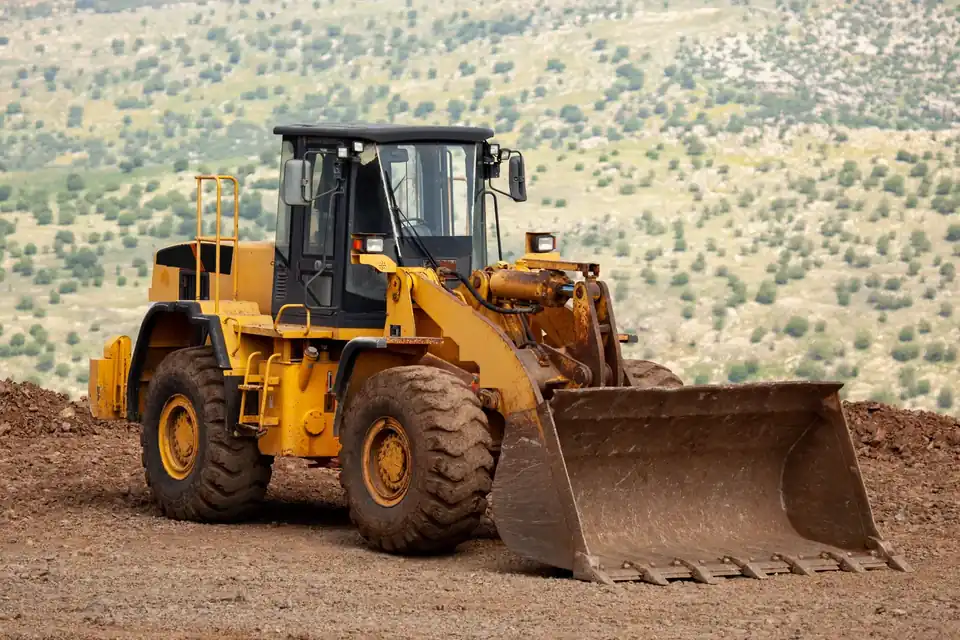
A front end loader (wheel loader) is a big four-wheel-drive machine with a bucket on the front. It scoops loose material, carries it on its tyres and tips it into a truck, a hopper or a heap. It bends in the middle to steer, so it turns tightly for its size.
We send front end loaders, each with an experienced operator, to quarries, mines, coal yards, sand and stone yards, and big building sites in all 9 provinces. The work is mostly loading and moving, not digging:
Loading trucks
Tippers, side tippers and ADTs, at the stockpile, the face or the weighbridge.
Stockpiles
Building, turning and tidying stockpiles of sand, stone, gravel, ore and coal.
Quarries
Feeding the crusher and screens, and loading product for customers.
Coal yards
Moving and loading coal, and keeping grades apart in separate heaps.
Site work
Moving fill, spreading material and cleaning up after earthworks. See earthworks.
Clearing
Loading cut bush, rubble and spoil after a clearing job. See site clearing.
Loader sizes: 950, 966 and 988 class
Wheel loaders are named by class, after the Cat models most people know. The bucket size is what matters for the job: it sets how many buckets fill a truck.
| Class | Common model (or similar) | Bucket | Operating weight | Buckets to fill a 10 cube tipper | Best for | Per day |
|---|---|---|---|---|---|---|
| 950 class | Cat 950 | 1.5–3.5 m³ | under 20 t | about 3–7 | Sand and stone yards, small quarries, building sites | R3,400–R3,800 |
| 966 class | Cat 966 | 3.5–4.5 m³ | about 23 t | about 3 | Quarries, coal yards, loading side tippers and ADTs | about R6,200 |
| 988 class | Cat 988 | 6 m³ and up | more than twice a 966 | about 2 | Mines and large quarries: blasted rock, high tonnage | on WhatsApp |
Mind the weight, not just the volume. A loose cube of crushed stone weighs about 1.60 t and dry sand about 1.42 t on Caterpillar's reference tables, so a 3.5 m³ bucket of stone is close to 5.6 t. A loader moves its load best at the bucket size its maker sets for that material; heavy rock buckets are smaller than buckets for coal or sand on the same machine.
Loading tippers, side tippers and ADTs
A loader should fill a truck in a few buckets. Too small a loader stretches every truck's wait; too big a loader can't tip into a small body without spilling.
- 10 cube tipper: about three or four buckets from a 950 class with a 3 m³ bucket, or three from a 966 class. See 10 cube tipper truck hire.
- 30 t ADT: the heaped body holds about 17–19 m³, so a 966 class fills it in about four or five buckets. See ADT hire.
- 34 t side tipper: the two bins hold about 40–45 m³ of coal between them, about 10–12 buckets from a 966 class. See side tipper hire.
Road trucks must leave within their legal mass. Where there's a weighbridge, the operator learns the bucket count for each material in the first few loads, and the weighbridge confirms it. Where there isn't one, load to the tons per cube for the material, not to the top of the body.
Front end loader hire rates
Our prices for front end loaders with operators, excluding VAT, with lowbed transport both ways as its own line.
| Size | Rate | Price |
|---|---|---|
| 1.5–3.5 m³ bucket (950 class) | Per day, with operator | R3,400–R3,800 * |
| 3.5–4.5 m³ bucket (966 class) | Per day, with operator | about R6,200 * |
* Few price points for this one, so treat it as a guide; the exact price comes back on WhatsApp.
These rest on few price points, so the exact rate comes back in writing on WhatsApp. A loader day is normally an 8–9 hour shift. On quarries and mines, loaders are usually hired by the month on about 200 machine hours, with the extra-hour rate, diesel basis (wet or dry) and standing time written into the contract: see mining plant hire. Every machine's price is on plant hire rates.
What changes the price
- Class and bucket, including a rock bucket or forks if you need them.
- Days or months, and single or double shifts.
- Wet or dry: dry means the operator is included and you pay the diesel. See wet vs dry hire.
- Standing time when no trucks arrive to load, charged as agreed on your quote.
- Lowbed transport both ways.
Front end loader, TLB, bobcat or excavator?
| Machine | Bucket or load | Digs below its wheels? | Gets to site | Per day |
|---|---|---|---|---|
| Front end loader, 950 class | 1.5–3.5 m³ bucket | No | Lowbed | R3,400–R3,800 |
| TLB | About 1 m³ loader bucket (Cat 428 or similar), plus a backhoe | Yes, with the backhoe | Drives on the road | R3,900–R5,150 |
| Bobcat | 608 kg safe load (Bobcat S450 or similar) | No | Trailer | R2,400–R3,700 |
| Excavator, 20–25 t | Digging bucket on a boom | Yes | Lowbed | R3,500–R5,600 |
- Pick a front end loader when the job is loading trucks or moving big volumes of loose material, all day, at one site.
- Pick a TLB for smaller volumes, or when the machine also has to dig trenches and holes. It drives to site, so there's no lowbed to pay.
- Pick a bobcat for small loads in tight spaces: back yards, inside sheds, paving prep.
- Pick an excavator to dig out a cut or a pit and load from where it stands.
Bulldozer vs front end loader
They look like rivals but do different jobs. A bulldozer pushes: a D6 class (about 23 t, 5.7 m³ blade) clears bush, spreads fill, shapes dam walls and rips hard ground with its rear ripper. A front end loader lifts and carries: it puts material into trucks, hoppers and heaps. On a quarry or mine they often work together, the dozer pushing material up and the loader loading it out.
Types of front end loaders
- Wheel loaders, from compact machines to 950, 966 and 988 class and bigger. This is what “front end loader” means on most sites.
- Track loaders: a loader bucket on crawler tracks, for soft, wet or rocky ground where tyres struggle.
- Skid steer loaders: the compact bobcat.
- TLBs: a loader on the front and a backhoe on the back. See TLB hire.
Getting the loader to site
Front end loaders travel on a lowbed, and transport both ways is its own line on your quote. Examples:
- Middelburg is one of the main centres we send machines from. Transport for a front end loader there and back usually comes to R6,000–R9,500, shown as its own line on your quote.
- Secunda is about 106 km from eMalahleni (Witbank) by road. Transport for a front end loader there and back usually comes to R9,120–R11,020, shown as its own line on your quote.
The lowbed needs a place to offload near the gate on firm, level ground. A loader on a long hire pays its transport once each way. See lowbed hire.
Loader operators and site rules
A front end loader is mobile plant under regulation 23 of the Construction Regulations, 2014. The operator must be trained, certified competent with proof of competency, authorised in writing, and hold a medical certificate of fitness. The loader needs an automatic reversing alarm, and the operator checks it every day before use against a checklist, recorded in a register kept in the machine. On a mine, the operator is appointed under the mine's code of practice for trackless mobile machines.
Our loaders come with experienced operators, and copies of their certificates come before the machine arrives, on request. See safety and certificates. Booking is a WhatsApp, a written price and a deposit: see how it works.
Front end loader hire near you
Loaders work wherever material is stockpiled and loaded: the coal fields of Mpumalanga around eMalahleni (Witbank) and Middelburg, the platinum and chrome mines of Rustenburg, and quarries and building sites across Gauteng, KwaZulu-Natal and the Western Cape. Every area: areas we cover.
WhatsApp us the loader size and townQuestions people ask
How much does front end loader hire cost?
With an operator, a 950 class loader is R3,400–R3,800 a day and a 966 class about R6,200 a day, excluding VAT. A 988 class is priced per job. We have few price points for loaders, so the exact rate comes back on WhatsApp, with lowbed transport as its own line.
What is the difference between a bulldozer and a front end loader?
A bulldozer runs on tracks and pushes material with a blade: it clears bush, spreads fill and rips hard ground, but it can't lift anything into a truck. A front end loader runs on tyres and carries material in a bucket: it loads trucks and works stockpiles, but it can't rip or push like a dozer. A D6 class dozer weighs about 23 t with a 5.7 m³ blade. See bulldozer hire.
What are the types of front end loaders?
Do you hire a 966 front end loader?
Yes. A 966 class wheel loader (Cat 966 or similar) with a 3.5–4.5 m³ bucket and an operator is about R6,200 a day with operator. It's the usual size for loading side tippers, ADTs and road tippers at quarries, coal yards and weighbridges.
Can a front end loader dig?
What size loader do I need to load tippers?
A 950 class with a 3 m³ bucket loads a 10 cube tipper in about three or four buckets (six or seven with a 1.5 m³ bucket), which suits most quarry and stockpile work. For side tippers and ADTs, a 966 class cuts the number of buckets and the time each truck waits. A TLB, with a bucket of about 1 m³, takes about ten.
Related
Sources we checked
- Cat 966 medium wheel loader specifications, Caterpillar product page (operating weight 23,196 kg, bucket range 2.8–11.9 m³)
- Construction Regulations, 2014 (GN R.84), regulation 23: construction vehicles and mobile plant
- Caterpillar earthwork volumes reference tables (loose material weights)
- Cat D6 dozer specifications (Caterpillar)
- Cat 428 backhoe loader specifications (Caterpillar)
- Bobcat S450 skid-steer loader specifications (Bobcat)
- SA Truck Bodies side tipper trailer volumes
Need a front end loader?
WhatsApp us the job, the town and the dates. We confirm the machine, the start date and the price in writing before the machine moves.
WhatsApp us now