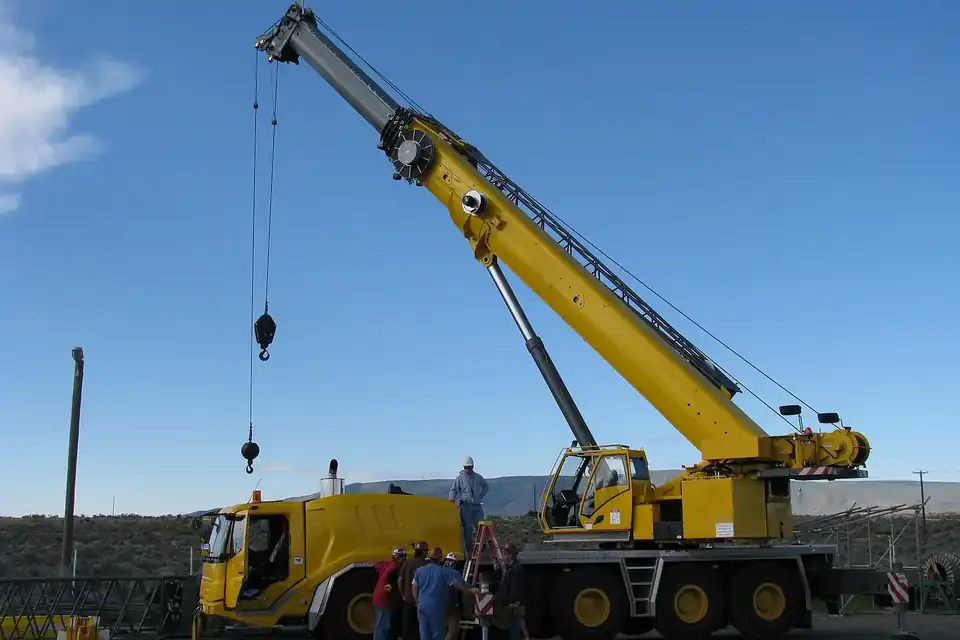
Safety and certificates
Last updated
Get a written price
- Send the job on WhatsApp: what you are doing, the town and the dates.
- Get your quote: the machine, the operator, transport and the total, in writing.
- Pay to book and the machine arrives on site with its operator.
We reply Monday to Friday 07:00–17:00, Saturday 07:00–13:00.
What we send before the machine arrives
Ask on WhatsApp or by email, and before the machine reaches your site you get copies of:
- The operator's proof of competency for that type of machine.
- The operator's medical certificate of fitness, as construction sites require.
- The current load-test certificate for cranes, crane trucks, cherry pickers, forklifts and telehandlers, issued by a registered lifting machinery entity.
These go straight into your safety file. Mines and large contractors can ask for company documents with their formal quote: info@basaltplanthire.co.za.
Ask for the certificates on WhatsAppEarthmoving machines: the Construction Regulations, 2014
TLBs, excavators, bobcats, graders, rollers, dozers, tippers and other construction vehicles and mobile plant fall under regulation 23 of the Construction Regulations, 2014. On a construction site the contractor must make sure every machine is of acceptable design, kept in good working order, and run only by an operator who:
- has received appropriate training, is certified competent and carries proof of competency;
- has a medical certificate of fitness to operate that machine, issued by an occupational health practitioner;
- is authorised in writing to operate it.
The operator must also inspect the machine every day before use with a checklist and record the findings in a register kept in the machine. Machines that travel or work on public roads must comply with the National Road Traffic Act.
What this means for you: when our TLB or excavator arrives, the operator and the paperwork are ready for your site's safety file. If your site needs the operator authorised in writing on your own letterhead, tell us and we'll arrange it on the first morning.
Cranes, cherry pickers and forklifts: the Driven Machinery Regulations, 2015
Lifting machines, meaning power-driven machines that raise, lower or move a load in suspension, fall under regulation 18 of the Driven Machinery Regulations, 2015. That covers mobile cranes, crane trucks, cherry pickers and other work platforms, forklifts and telehandlers.
| Rule | What it means on your job |
|---|---|
| Thorough examination and performance (load) test by a lifting machinery inspector of a lifting machinery entity | Before first use, every time the machine is dismantled and re-erected, and at intervals not exceeding 12 months. Our lifting machines carry a current certificate. |
| Register for leased lifting machines | As the user of a hired machine, you keep the latest performance test and service records (not older than 12 months) on your premises. We send copies. |
| Load indicator on machines over 5,000 kg capacity | Bigger cranes show the operator the mass being lifted. |
| Certified operators | No one may operate a lifting machine listed in the National Code of Practice unless they hold a certificate of training from an accredited training provider. |
More detail, including how load tests work and what to check before a crane arrives: lifting machinery and load tests.
Lifting jobs: riggers, banksmen and the lift area
For crane and crane truck lifts, the operator works with someone who slings the load and gives signals (a rigger or banksman). Tell us when you book whether you have a trained rigger on site or need us to send one. You prepare:
- Firm, level ground for the outriggers, away from trench edges, manholes and soft fill.
- A clear lift area, with people kept out of the swing and under-load zones.
- The load's weight and the distance from where the crane stands to where the load lands: these decide the crane size. See the crane guide.
- Overhead power lines identified, and road closure or traffic permits if the crane stands in a road.
Machine brands
We describe machines by type and size with a common model as a guide, for example “JCB 3CX or similar” for a standard TLB. The exact make and model of your machine is confirmed with your quote.
Questions people ask
Does a TLB operator need a certificate?
Yes. On a construction site, the Construction Regulations, 2014 require every operator of construction vehicles and mobile plant, TLBs included, to be trained, certified competent, carry proof of competency, hold a medical certificate of fitness and be authorised in writing to operate the machine. Driving it on a public road also needs the right driving licence.
How often must a crane be load tested in South Africa?
Under regulation 18 of the Driven Machinery Regulations, 2015, a lifting machine gets a thorough examination and performance test by a lifting machinery inspector of a lifting machinery entity before it is first used, every time it is dismantled and re-erected, and then at intervals not exceeding 12 months.
What paperwork must I keep for a hired crane or cherry picker?
The user of a leased lifting machine must keep a register on their premises with the machine's latest performance test and service records, not older than 12 months. We send copies so you can file them.
Do cherry picker and forklift operators need a certificate?
Yes. Cherry pickers, forklifts, telehandlers and cranes are lifting machines. The Driven Machinery Regulations say no one may operate them unless they hold a certificate of training from an accredited training provider, under the National Code of Practice for Training Providers of Lifting Machine Operators.
Related
Sources we checked
- Construction Regulations, 2014 (GN R.84, 7 February 2014), {'regulation 23': 'construction vehicles and mobile plant'}
- Driven Machinery Regulations, 2015 (GN R.540, 24 June 2015), {'regulation 18': 'lifting machines and lifting tackle'}
- National Code of Practice for Training Providers of Lifting Machine Operators, 2024 (Notice 5588 of 29 November 2024)