Earthworks and excavation
Last updated
What earthworks involves
Earthworks turns the ground you have into the ground your plans need: the right level, firm enough to build on, and shaped so water runs away. Every earthworks job, from a single house to a factory site, follows the same order.
- Set out. A surveyor or your builder pegs the building lines and marks the levels: how much comes off (cut) and how much goes on (fill) at each point.
- Clear and strip. Bush, stumps, rubble and any old structures go first (see site clearing and demolition), then the topsoil is stripped and stockpiled; it is too soft to build on.
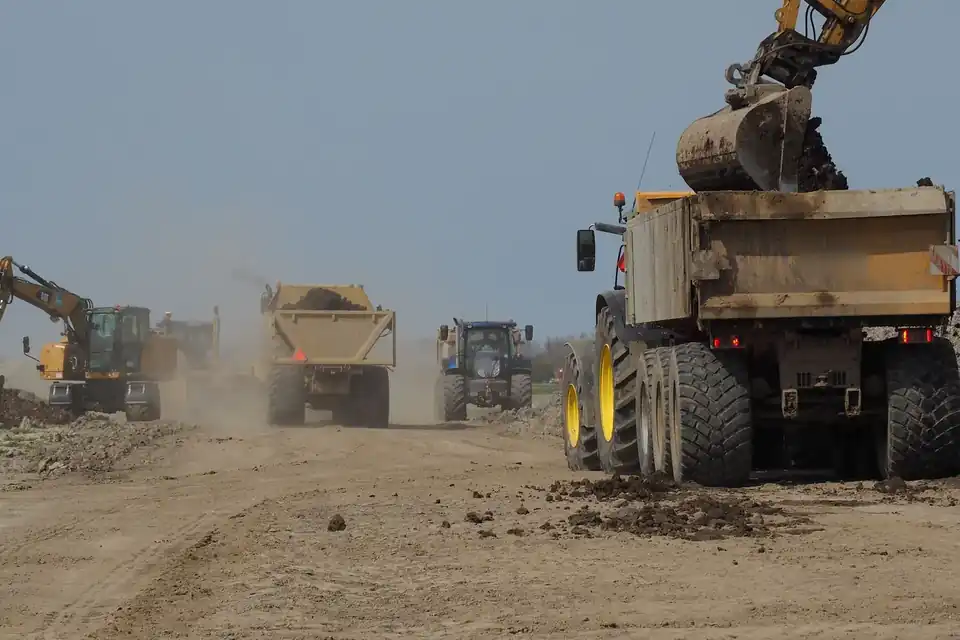
- Cut. The excavator or TLB digs out the high ground and loads it onto tippers or ADTs.
- Fill and compact in layers. Fill is spread thin by a grader or bobcat, brought to the right moisture with a water truck, and compacted by a roller, one layer at a time. Dumping it in one thick heap and rolling the top leaves soft fill underneath that settles later.
- Test. On engineered fill, each layer is tested for density before the next goes on.
- Dig the details. Foundations, service trenches, pool holes, stormwater pipes and channels.
- Trim and finish. The grader trims to final level and falls, ready for the builder or the paving.
Earthworks machines and prices
Every machine comes with an experienced operator or driver. Small sites need one or two machines; bulk earthworks need a team so the digging, hauling and compacting keep pace with each other.
| Machine | What it does in earthworks | Per day |
|---|---|---|
| TLB (JCB 3CX or similar) | Foundations, pools, trenches and loading on house-sized sites; digs to about 4.45 m | R3,900–R5,150 |
| Mini excavator | Foundations and pools where the access is narrow | R1,700–R3,000 |
| Excavator, 20–25 t (CAT 320 or similar) | Bulk digging, basements, big pools, loading trucks; digs to about 6.7 m | R3,500–R5,600 |
| Bulldozer, D6 class | Pushing large volumes of soil over short distances, stripping topsoil | R5,000–R7,750 |
| 10 cube tipper with driver | Carting soil off site or fill in | R3,700–R5,250 |
| ADT, 30 t | Hauling cut to fill across rough ground on big sites | R5,650–R5,900 |
| Grader, 140 class | Spreading fill in thin layers, trimming levels and falls | R4,500–R6,000 |
| Water truck, 14,000–18,000 litre | Bringing fill to the right moisture for compaction | R2,400–R2,800 |
| Roller, 10–12 t | Compacting fill layers and road layers | R2,150–R5,600 |
Foundation excavation
Foundation excavation is the most common earthworks job we do on house plots. A TLB digs strip foundation trenches to the width and depth on your approved plans and loads the spoil; a mini excavator does it where the access is narrow. For a raft foundation the whole footprint is dug out to level, and the base is compacted before the steel goes in.
- Depth: set by the plans and your engineer, based on the soil. Expansive clay, collapsible sand and old fill need deeper or special foundations, which is why the foundation plan comes before the machine.
- Inspection: under regulation A22 of the National Building Regulations, the property owner must give the municipality at least two working days' notice that the trenches are ready, and no foundation may be cast until the inspector has inspected and approved them. Don't book the concrete until the inspection is done.
- Time and cost: foundation trenches for a three-bedroom house usually take a TLB 1–2 days: R7,800–R10,300 for two days, plus tipper loads for surplus soil.
- Neighbours: where digging could affect an adjoining building, wall or road, the Construction Regulations require steps to keep it stable. Boundary walls on shallow footings are the usual risk.
Swimming pool excavation
A pool hole is a short, clean dig: the TLB or excavator digs to the pool builder's shape and depth and loads the soil straight onto tippers. The real questions are access and soil volume.
- Access: a TLB needs a clear way into the garden. Where the side access is too narrow for it, a mini excavator digs and a bobcat moves the soil to the street.
- Soil volume: work it out as length × width × average depth. An 8 m × 4 m pool averaging 1.5 m deep is 48 m³ in the ground. Dug soil takes up more space than it did in the ground, so plan for more loads than the hole's volume: at least five 10 cube tipper loads here.
- Time: usually 1–2 TLB days, longer in rock.
- Cost: TLB days at R3,900–R5,150 a day with operator plus carting. A 10 cube tipper with driver is R3,700–R5,250 a day with operator, or about R2,300 per load in Gauteng.
Stormwater installation and drainage earthworks
Stormwater earthworks keep water away from buildings and off the neighbours: shaping the ground to fall away from the house, digging swales (shallow grassed channels), cut-off drains, French drains, soakaways and trenches for stormwater pipes, and the basins of attenuation ponds on bigger sites. The levels come from your engineer or the approved site plan.
A TLB digs most residential stormwater trenches and swales; an excavator handles deep pipe trenches and pond basins, and a grader shapes long falls on roads and building pads. Work in a road reserve or on municipal ground needs a wayleave first (in Cape Town the Wayleaves By-law, 2026 covers excavation and trenching on municipal property). The trenching side is covered on trenching.
Bulk earthworks: cut and fill and compaction layers
Bulk earthworks moves large volumes to make a level building pad, a road bed or a dam wall. The aim is to balance cut and fill, so soil dug from the high side is used on the low side and as little as possible is trucked away or bought in.
Placing and compacting fill
Fill is placed in thin layers, each brought to the right moisture and compacted before the next. Too dry and the soil won't compact; too wet and it pumps under the roller. Your engineer's earthworks specification sets the layer thickness, the material and the density each layer must reach, usually as a percentage of the material's maximum dry density.
How compaction is tested
- In the lab: the SANS 3001 maximum dry density test finds the material's maximum dry density and optimum moisture content, the target the field tests are measured against.
- On site: SANS 3001-NG5 measures density in place with a nuclear density gauge, or by the SANS 3001 sand replacement test. A soils lab does the testing; the result shows whether the layer passed.
Bulk earthworks volume calculation
The quick check is area × average depth. A 40 m × 50 m building pad (2,000 m²) cut down by an average of 0.5 m gives 1,000 m³ of cut. Your engineer's bulk earthworks plan uses a grid of levels or a 3D survey to work out cut and fill properly, and adds allowances because soil bulks when dug and shrinks when compacted.
More detail on layers, moisture and testing is in our earthworks guide and soil compaction and land levelling.
How long earthworks takes and what it costs
| Job | Machines | Typical time |
|---|---|---|
| Foundation trenches, three-bedroom house | TLB + tipper | 1–2 days |
| Garden swimming pool | TLB or mini excavator + tippers | 1–2 days |
| Driveway or yard box cut and compaction | TLB, small roller, tipper | 1–2 days |
| Basement on a house plot | Excavator + tippers | 3–7 days |
| Bulk building pad, about 2,000 m², cut and fill | Excavator, ADT or tippers, grader, water truck, roller | 1–3 weeks |
Here is a worked example for bulk earthworks in Johannesburg: a 20–25 t excavator for five days, with lowbed transport both ways.
| Example quote (for illustration only) | Amount |
|---|---|
| 20–25 t excavator, 5 days at R3,500–R5,600 a day with operator | R17,500–R28,000 |
| Transport both ways to Johannesburg | R6,000–R9,500 |
| Example total, excl. VAT | R23,500–R37,500 |
Add the grader, roller, water truck and trucks the job needs; every machine's price is on plant hire rates. Your own quote comes back in writing on WhatsApp before any machine moves.
Get an earthworks quoteWhat you must sort out before earthworks start
- Approved plans and levels: building plans approved by the municipality, and a site plan showing levels, so the operator knows exactly what to dig.
- A soil report on bigger jobs: your engineer needs to know the soil to design foundations and the fill specification.
- Underground services: the Construction Regulations require that electricity, water, gas and similar services are located before excavation starts. Get the municipal service plans and mark every known pipe and cable.
- Where the soil goes: a place to stockpile topsoil, a fill area, or a legal dump site for surplus soil.
- Access: a gate and path wide and firm enough for the machine and trucks, and a plan for parking tippers without blocking the street.
- Safety: excavations people work in must be shored or sloped, inspected daily, and barricaded at least 1 m high where the public can reach them.
Earthworks contractors in Gauteng and across South Africa
We send earthmoving machines with operators to sites in all nine provinces. In Gauteng most of our earthworks are house foundations, pools and estate building pads around Johannesburg, Pretoria and Centurion. Johannesburg is one of the main centres we send machines from. Transport for an excavator there and back usually comes to R6,000–R9,500, shown as its own line on your quote. See plant hire in Gauteng, Johannesburg and Pretoria, or every province on areas we cover.
Building a farm road or a dam instead? See gravel roads and driveways and dam building.
WhatsApp us your plansQuestions people ask
What are earthworks in construction?
Earthworks are all the work that changes the ground before building: clearing, stripping topsoil, cutting (digging out) high ground, filling and compacting low ground, digging foundations, trenches and pools, and shaping the levels so stormwater runs away. Bulk earthworks is the big-volume part, done with excavators, tippers or ADTs, graders and rollers.
How much does pool excavation cost?
A standard garden pool usually takes a TLB one or two days, which is R7,800–R10,300 for two days, plus tipper loads to cart the soil. An 8 m by 4 m pool with an average depth of 1.5 m is 48 m³ of soil in the ground, and it takes up more space once dug, so allow at least five 10 cube tipper loads. We price your pool from the size and the access in writing.
How deep should foundations be?
As deep as your approved building plans and engineer say, which depends on the soil and the load. Clay that swells and shrinks, loose fill and collapsible sand all need deeper or special foundations. Before any concrete goes in, the municipal building inspector must inspect and approve the trenches.
What machine is used for earthworks?
A TLB for house-sized work; a 20–25 t excavator for bulk digging and loading; a bulldozer to push large volumes; tipper trucks or ADTs to haul; a grader to spread and level; a water truck to bring the soil to the right moisture; and a roller to compact. Small sites need only the TLB and a tipper.
How do you calculate bulk earthworks volume?
Multiply the area by the average depth of cut or fill. A 40 m by 50 m building pad (2,000 m²) cut down an average of 0.5 m is 1,000 m³ of cut. Engineers do it properly with a grid of levels or a 3D survey, working out cut and fill separately so the site balances. Dug soil bulks up, so it needs more truck loads than its volume in the ground, and fill shrinks when compacted.
Related
Sources we checked
- National Building Regulations (GN R.2378) - regulation A22 (notices and inspection of foundation trenches)
- Construction Regulations 2014 (GN R.84) - regulation 13 (excavation work)
- CSIR - SANS 3001 test methods for road and soil materials
- JCB 3CX backhoe loader specification sheet (dig depth and operating weight)
- Cat 320 hydraulic excavator specifications
- City of Cape Town Wayleaves By-law 2026
Need a machine?
WhatsApp us the job, the town and the dates. We confirm the machine, the start date and the price in writing before the machine moves.
WhatsApp us now