TLB hire in Port Elizabeth (Gqeberha)
Last updated
TLB hire in Port Elizabeth: rates
| Rate | Price | Notes |
|---|---|---|
| Day, with operator | R3,900–R5,150 | Standard 4x4 TLB, 8 to 9 hours |
| Hour, dry | R320–R410 | Operator included, diesel yours, minimum hours apply |
| Day, breaker TLB | R5,000–R6,550 | Slabs, tar and inland rock |
| Week, with operator | R19,500–R25,750 | Five working days |
Gqeberha (Port Elizabeth) is one of the main centres we send machines from. The TLB drives to site, so travel is small and confirmed on WhatsApp with your price. Hours, standing time and longer blocks: TLB hire rates.
Get a Gqeberha TLB price on WhatsAppTLB jobs across Nelson Mandela Bay
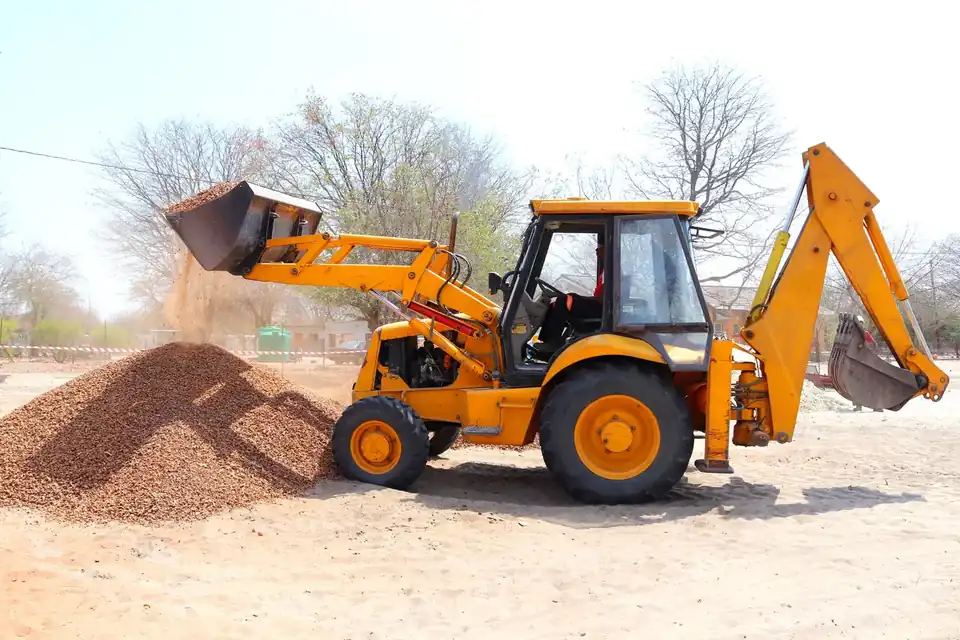
The TLB we send (JCB 3CX or similar) digs about 4.45 m deep and carries about 1 m³ in its loader bucket. Around the bay it spends its days on:
- Walmer, Summerstrand and the western suburbs: pools, extensions and sewer and stormwater connections on established stands.
- Motherwell and the northern areas: housing, room additions and water and sewer connections, usually one or two days each.
- Struandale and Deal Party: yard drains, cable trenches and slab repairs at warehouses and component factories.
- Coega: trenches, foundations and backfill at new builds in the special economic zone beside the deep-water Port of Ngqura, where Transnet has planned a new manganese export terminal. The zone's and the port's own access and work rules apply.
- Kariega: factory yards around the car plants and house foundations in the suburbs. Kariega (Uitenhage) is about 37 km from Gqeberha (Port Elizabeth) by road. Transport for a TLB there and back usually comes to R3,180–R3,840, shown as its own line on your quote.
- Jeffreys Bay: foundations, pools and sewer connections for homes and complexes on sandy ground. Jeffreys Bay is about 82 km from Gqeberha (Port Elizabeth) by road. Transport for a TLB there and back usually comes to R7,060–R8,520, shown as its own line on your quote.
Digging in coastal sand: dig, lay, backfill
Along the coast and in the suburbs near the sea the ground is mostly sand. It digs fast, but the trench walls slump, so the job runs in short sections: the TLB opens a length, the pipe goes in, and the trench is backfilled before the next length is opened. Deeper trenches are battered back (sloped) or shored, because nobody may work in a trench whose sides aren't supported unless a competent person has confirmed in writing that they will stand (Construction Regulations, 2014, regulation 13).
Sand compacts well with vibration and a little water: a plate compactor (R270–R370 a day) or a rammer follows the TLB, layer by layer. Inland towards Kariega, clay and rock take over in places, so tell us what you see in the first spade depth and we send the bucket or the breaker accordingly.
Wind, rain and wayleaves in Gqeberha
Rain in any month. The South African Weather Service notes that all but the south-western and southern parts of the country rely on summer rain. Gqeberha is on the southern coast, so wet days can come in any season; agree standing time on outdoor earthworks whatever the month.
Wind. The Windy City lives up to its name, and dry sand blows off spoil heaps and stockpiles. Keep them damp or covered, especially next to neighbours' pools and cars.
Wayleaves. A trench across a verge or pavement is road-reserve work: apply to Nelson Mandela Bay Municipality for a wayleave before the TLB is booked.
Smaller machines. Where the gate is narrow, a bobcat (Bobcat S450 or similar, about 1.6 m wide) moves sand and rubble for R2,400–R3,700 a day with operator, and a mini excavator digs narrow trenches for R1,700–R3,000 a day with operator.
Every machine in the metro: plant hire in Port Elizabeth. The province: plant hire in the Eastern Cape. Up the coast: TLB hire in East London. West along the N2: TLB hire in Cape Town. Specs and operators: TLB hire.
WhatsApp your Gqeberha TLB jobQuestions people ask
Do I book for Port Elizabeth or Gqeberha?
Either. The city's official name became Gqeberha in 2021 and Uitenhage became Kariega, but both names are in daily use. A TLB booked for “PE” or “Gqeberha” goes to the same site in Nelson Mandela Bay.
Can a TLB work inside the Coega zone?
Yes, once the zone's access and work rules are met. Send them with the booking, together with any site induction dates, and we prepare the operator's certificates and the machine paperwork before it arrives.
What does a TLB cost in Kariega?
The same hire rate, R3,900–R5,150 a day with operator with an operator. Kariega (Uitenhage) is about 37 km from Gqeberha (Port Elizabeth) by road, so travel both ways is its own line, usually R3,180–R3,840.
Related
Sources we checked
- South African Weather Service, What kind of droughts does South Africa experience? (summer vs south-western and southern rainfall)
- Fastmarkets (5 September 2022), planned manganese export terminal at the Port of Ngqura
- JCB 3CX and 4CX backhoe loader specifications (JCB spec sheet P995-B)
- Bobcat S450 skid-steer loader specifications (Bobcat)
- Construction Regulations, 2014 (GN R.84), regulation 13: excavation work
Need a TLB in Gqeberha (Port Elizabeth)?
WhatsApp us the job, the town and the dates. We confirm the machine, the start date and the price in writing before the machine moves.
WhatsApp us now